Family caregiver pay, state by state
How much could you get paid to care for a family member?
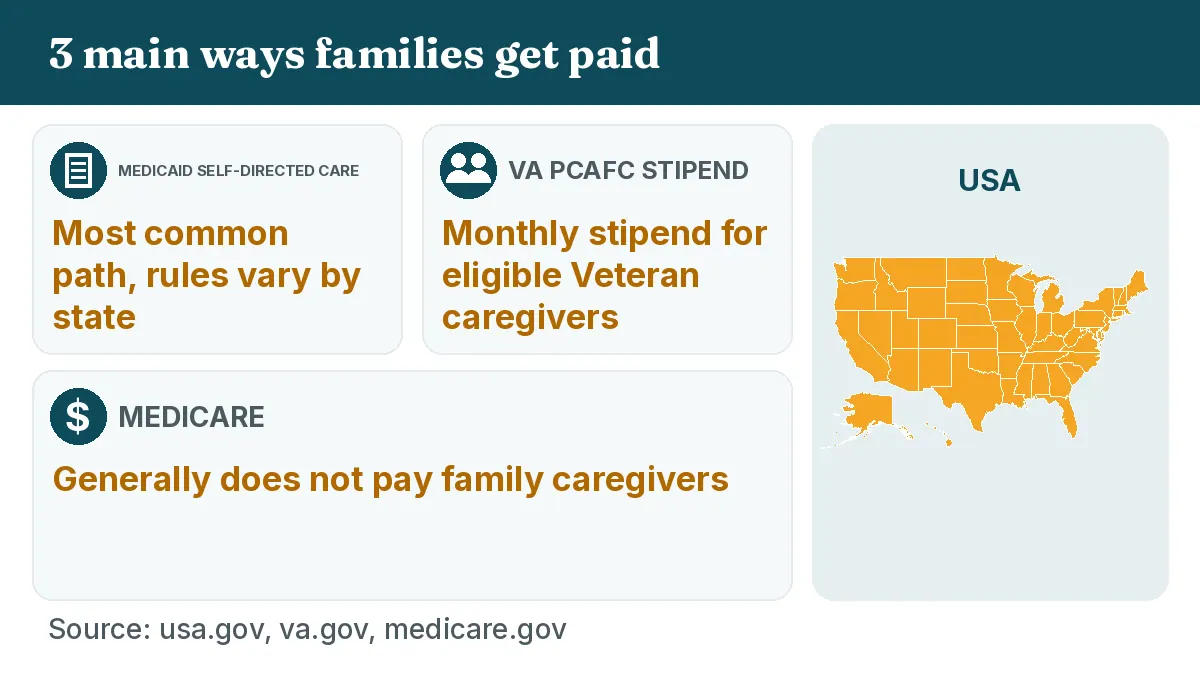
Most families get paid through Medicaid. If your loved one qualifies for Medicaid home care, many states let them hire you, and the program pays you.1
- Official sources
- Last verified Oct 20, 2026
- Independent site, not a government agency
Find your state
Or browse all 50 states + DC
- Alabama
- Alaska
- Arizona
- Arkansas
- California
- Colorado
- Connecticut
- Delaware
- District of Columbia
- Florida
- Georgia
- Hawaii
- Idaho
- Illinois
- Indiana
- Iowa
- Kansas
- Kentucky
- Louisiana
- Maine
- Maryland
- Massachusetts
- Michigan
- Minnesota
- Mississippi
- Missouri
- Montana
- Nebraska
- Nevada
- New Hampshire
- New Jersey
- New Mexico
- New York
- North Carolina
- North Dakota
- Ohio
- Oklahoma
- Oregon
- Pennsylvania
- Rhode Island
- South Carolina
- South Dakota
- Tennessee
- Texas
- Utah
- Vermont
- Virginia
- Washington
- West Virginia
- Wisconsin
- Wyoming

Written by Luis Fernando Garcia
Reviewed against official sources Last verified 4 official sources cited
Key facts
- Main path
- State Medicaid self-directed care1. How it works
- Pay amount
- Varies by state and program1. What we know
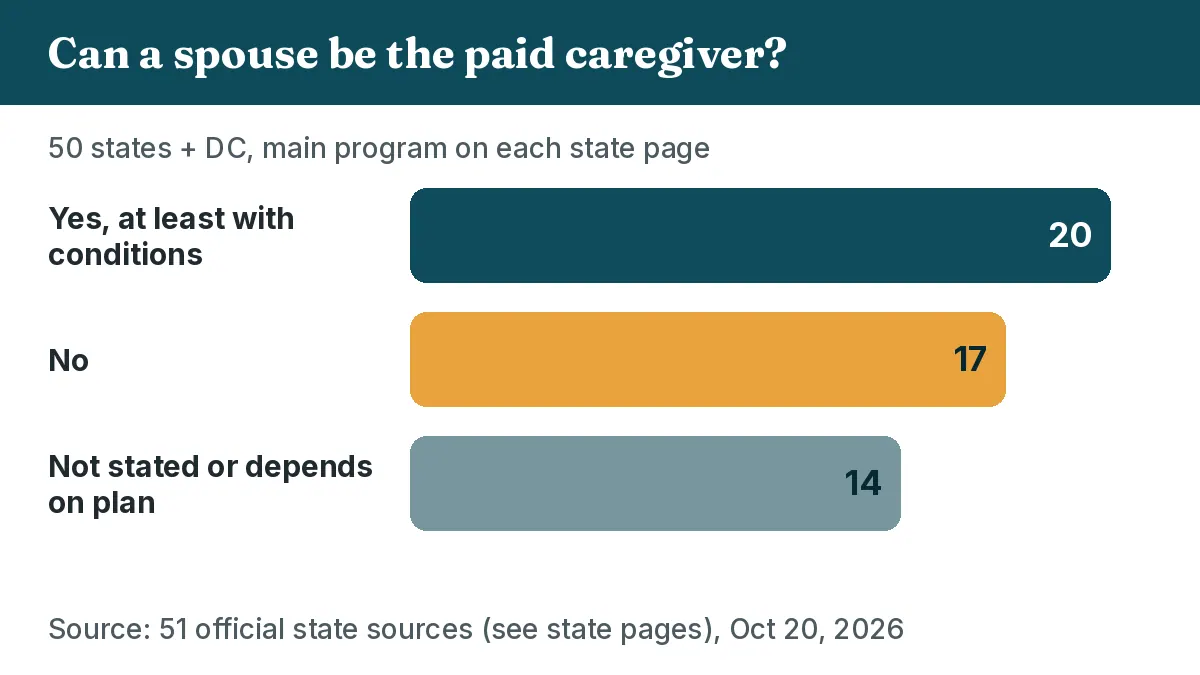
Compare all states
Each row links to a state page with its own official sources.
| State | Main program | Spouse can be paid? | Published pay |
|---|---|---|---|
| Alabama | Personal Choices (self-directed waiver services) | Not stated on the official page | See state page |
| Alaska | Consumer-Directed Personal Care Services (CDPCS) and Community First Choice | Yes, through Community First Choice PCS | See state page |
| Arizona | ALTCS Self-Directed Attendant Care (SDAC) and spouse attendant care | Yes, through an agency, max 40 hrs per week | Not published |
| Arkansas | IndependentChoices | No | See state page |
| California | In-Home Supportive Services (IHSS) | Yes, under program rules | See state page |
| Colorado | Consumer-Directed Attendant Support Services (CDASS) | Yes, for extraordinary care | Not published |
| Connecticut | Community First Choice (CFC) | No | See state page |
| Delaware | Self-Directed Attendant Care (DSHP Plus) | Yes, up to 40 hrs per week | See state page |
| District of Columbia | EPD Waiver: Services My Way | No | See state page |
| Florida | SMMC Long-Term Care Participant Direction Option (PDO) | Check with your LTC plan | Not published |
| Georgia | Structured Family Caregiving (CCSP and SOURCE waivers) | No | Not published |
| Hawaii | QUEST Integration self-direction (Personal Assistance) | Yes, in extraordinary circumstances | See state page |
| Idaho | Medicaid Personal Care and Attendant Care | No (ended July 2025) | See state page |
| Illinois | Home Services Program (HSP), Personal Assistant | Yes, extraordinary care only | See state page |
| Indiana | Structured Family Caregiving (SFC) | Not stated on the state fact sheet | Not published |
| Iowa | Consumer Choices Option (CCO) | Possibly, under the Elderly Waiver | See state page |
| Kansas | KanCare HCBS self-direction | Varies by waiver | See state page |
| Kentucky | Participant Directed Services (PDS) | Yes, with DAIL approval | See state page |
| Louisiana | Community Choices Waiver Self-Direction Option | Yes, extraordinary care only | See state page |
| Maine | MaineCare Consumer Directed Attendant Services | Check with OADS | See state page |
| Maryland | Community First Choice (CFC) self-directed personal assistance | Not stated on the official page | See state page |
| Massachusetts | MassHealth PCA program and Adult Foster Care (AFC) | No | See state page |
| Michigan | Home Help program | No (Home Help) | See state page |
| Minnesota | PCA Choice and Community First Services and Supports (CFSS) | Yes, since Oct 2024 | See state page |
| Mississippi | Elderly and Disabled Waiver, relatives as direct care workers | No | See state page |
| Missouri | Consumer Directed Services (CDS) | No | See state page |
| Montana | Self-directed Community First Choice and Personal Care | Yes, under CFCS rules | See state page |
| Nebraska | Medicaid HCBS waiver independent providers and LRI Personal Care | Yes, LRI Personal Care only | See state page |
| Nevada | Personal Care Services, self-directed through an ISO | No | See state page |
| New Hampshire | Choices for Independence (CFI) participant-directed services | Generally no | See state page |
| New Jersey | Personal Preference Program (PPP) | Not stated on the state page | Not published |
| New Mexico | Self-Directed Community Benefit (SDCB) | Yes, with MCO approval | See state page |
| New York | Consumer Directed Personal Assistance Program (CDPAP) | No | See state page |
| North Carolina | CAP/DA consumer direction | Not stated on the official page | See state page |
| North Dakota | Family Personal Care and Family Home Care | Yes | See state page |
| Ohio | PASSPORT Participant Direction | Yes, under OAC 5160-44-32 | See state page |
| Oklahoma | ADvantage Consumer-Directed Personal Assistance (CD-PASS) | Only by exception | See state page |
| Oregon | In-Home Services (homecare worker) and Spousal Pay Program | Yes, Spousal Pay Program | See state page |
| Pennsylvania | Community HealthChoices (CHC) participant-directed services | No | Not published |
| Rhode Island | Personal Choice Program | No | See state page |
| South Carolina | Community Choices Waiver participant-directed Attendant Care | Check with SCDHHS | See state page |
| South Dakota | HOPE Waiver Structured Family Caregiving | Not stated on the official page | See state page |
| Tennessee | TennCare CHOICES Consumer Direction | No (consumer direction) | See state page |
| Texas | Consumer Directed Services (CDS) option | Only in CMPAS | Not published |
| Utah | Aging Waiver self-administered services | Extraordinary care only | See state page |
| Vermont | Choices for Care self-directed services | Yes, for personal care | See state page |
| Virginia | Consumer-Directed Services | Yes, since July 2025 | See state page |
| Washington | Individual Provider (DSHS long-term services) | No (Medicaid LTSS) | See state page |
| West Virginia | Aged and Disabled Waiver Personal Options | No | See state page |
| Wisconsin | IRIS Self-Directed Personal Care | Yes | See state page |
| Wyoming | Community Choices Waiver participant direction | Yes, with conditions | See state page |
How to apply, step by step
- Check if your loved one has Medicaid, or apply at your state Medicaid office.1
- Ask for a home care or long-term services assessment.4
- Ask if there is a self-directed or consumer-directed option.4
- Ask if a relative like you can be hired, and enroll as the worker.1
- If your loved one is a Veteran, also apply for VA caregiver support with VA Form 10-10CG.3
Frequently asked questions
Can I get paid by the state to take care of a family member?
Often, yes, if the person you care for qualifies for Medicaid home care. Many states let them hire a relative or friend. Rules and pay vary by state (USA.gov).
Does Medicare pay family caregivers?
Generally no. Medicare does not pay for custodial care like bathing or dressing when that is the only care needed (Medicare.gov).
Can a spouse get paid?
It depends on the state and program. Some exclude spouses and some allow them with limits. See our spouse caregiver page.
What if the person I care for is a Veteran?
The VA Program of Comprehensive Assistance for Family Caregivers pays a monthly stipend to eligible Primary Family Caregivers (VA.gov).
Sources
- USA.gov, Get paid as a caregiver for a family member: https://www.usa.gov/disability-caregiverOfficial
- Medicare.gov, Home health services: https://www.medicare.gov/coverage/home-health-servicesOfficial
- VA.gov, PCAFC: https://www.va.gov/family-and-caregiver-benefits/health-and-disability/comprehensive-assistance-for-family-caregivers/Official
- CMS, Self-directed HCBS booklet: https://www.cms.gov/files/document/hcbs-consumer-directed-care-booklet-102815pdfOfficial
Last verified